The Performer
Historical figures whose financial lives illustrate the pattern — at its best and at its worst.
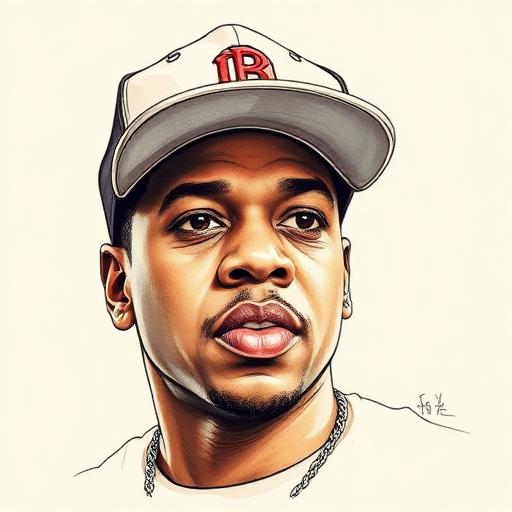
Jay-Z builds a business empire as an extension of personal brand — 1990s to present
Jay-Z's financial trajectory is a textbook illustration of the Performer archetype at its most sophisticated. He began as a rapper, but almost every business decision he made — Rocawear clothing, Armand de Brignac champagne, D'Ussé cognac, the streaming service Tidal, the sports agency Roc Nation, an art collection that became genuinely significant — was simultaneously a business investment and an extension of his personal identity and brand. The spending and the building were always intertwined. He became a billionaire not despite the performer dimension of his identity but because of it: his personal brand was the asset, and he understood how to capitalise it systematically. The Performer archetype at its best: visible success and genuine wealth creation are not in tension — the identity is the strategy.

Coco Chanel turns her own identity into a global empire — 1910s to 1971
Coco Chanel built one of the most enduring luxury brands in history by making herself the product. Her personal style — liberating women from corsets, popularising jersey fabric, the little black dress, costume jewellery worn without apology — was inseparable from the brand she created. She lived at the Ritz, moved among artists and aristocrats, and curated her own image as carefully as any collection. Her masterstroke was Chanel No. 5: rather than relying on dress sales alone, she licensed her name into perfume, creating a royalty stream that funded the house for generations. The Performer's defining insight, executed with total commitment: when the personal identity and the product are genuinely one, visibility isn't vanity — it's the business model. The brand's strength was precisely that it performed who she was.

Gianni Versace builds a fashion house on personal vision and visible excess — 1978 to 1997
Versace founded his fashion house in 1978 and built it into one of the most recognisable luxury brands in the world on the basis of a completely personal aesthetic vision — bold, sexual, maximalist, unapologetically excessive. He dressed the most famous people in the world, threw legendary parties, owned a palazzo in Milan and a mansion in Miami, and made his personal life inseparable from his brand. His spending was not separate from his business — it was advertising. The Medusa head logo, the gold, the excess — all of it was a deliberate statement about what the brand stood for, and it worked at an extraordinary scale. The Performer's core insight, executed with complete commitment: when identity and product are genuinely aligned, visibility is an asset, not a vanity.

Donald Trump's use of personal brand as financial leverage — 1980s
Whatever one thinks of Trump politically, his financial maneuvers in the 1980s are a clear historical illustration of the Performer archetype — specifically its relationship between identity, money, and leverage. Trump understood before almost anyone else in real estate that the value of his name — what it signalled, what it performed — could be licensed and leveraged as an asset independent of any specific building. He put his name on properties he didn't own, negotiated deals partly on the strength of the image he projected, and built a financial position on the performance of wealth as much as on wealth itself. The cautionary dimension is equally instructive: in the early 1990s, the gap between what the brand performed and what the underlying finances could support became catastrophic, resulting in multiple bankruptcies. The Performer's blind spot made historically explicit.