The Minimalist
Historical figures whose financial lives illustrate the pattern — at its best and at its worst.
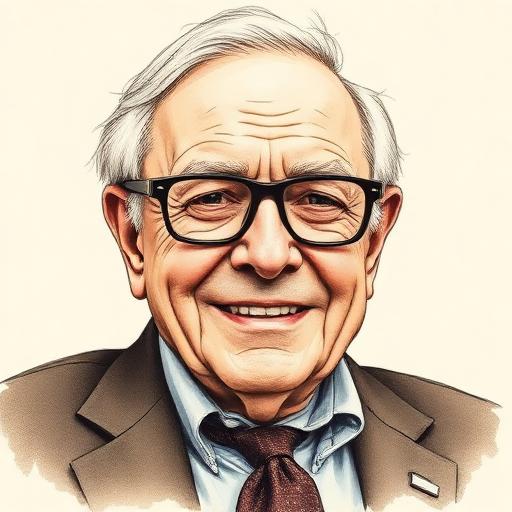
Warren Buffett's personal lifestyle against his professional wealth
Buffett is an unusual entry here because he also appears in the Builder section — but his personal spending behavior is a distinct story that belongs to the Minimalist archetype. He has lived in the same house in Omaha, Nebraska since 1958, purchased for $31,500. He famously eats at McDonald's most mornings, drives himself to work, and has given away the vast majority of his wealth to the Gates Foundation rather than spending it on visible luxury. For decades he earned a salary of $100,000 as CEO of Berkshire Hathaway — a number he never raised. His personal financial behavior is almost completely disconnected from status, visibility, or the performance of success. The Minimalist archetype isn't about having less — it's about the relationship with what you have being driven entirely by personal value rather than external signal.

Anne Scheiber turns $5,000 into $22 million in quiet obscurity — 1944 to 1995
Anne Scheiber worked as an auditor for the IRS, where she was repeatedly passed over for promotion and retired in 1944 on a modest pension with about $5,000 in savings. Living frugally in a small rent-controlled New York apartment, wearing the same worn coat for years and rarely spending on herself, she invested patiently in blue-chip companies whose products she understood, reinvested every dividend, and almost never sold. She avoided fees, avoided trading, and ignored decades of market noise. When she died in 1995 at the age of 101, her portfolio was worth roughly $22 million — which she left almost entirely to a university to fund scholarships for women. Nobody around her had any idea. Scheiber is the Minimalist archetype distilled: extreme simplicity of life, indifference to visible consumption, and the quiet power of consistency and compounding over a very long horizon.

Ingvar Kamprad builds IKEA from a bicycle shed and lives like a regular person forever
Kamprad founded IKEA in 1943 from a shed in rural Sweden, selling matches and pencils. He grew it into one of the largest furniture companies in the world and became one of the wealthiest people in Europe. He was also legendarily frugal in his personal life: he flew economy class into his seventies, drove an old Volvo for decades, ate lunch at IKEA cafeterias, and stayed in budget hotels when travelling for business. He reportedly retrieved salt and pepper packets from restaurants to take home. His frugality was not performance — it was genuine indifference to visible consumption. What he cared about was the business and the mission. His personal spending bore no relationship to his net worth. This is the Minimalist's defining pattern: the external financial life is almost invisible relative to the internal conviction about what money is for.

Ronald Read — janitor and gas station attendant who died with an $8 million portfolio — 2014
Ronald Read worked as a janitor and gas station attendant in Vermont for most of his life. When he died in 2014 at the age of 92, his estate was worth $8 million — almost entirely in blue-chip stocks he had bought, held, and almost never sold over decades. He lived simply, drove an old car, and was reportedly still splitting firewood himself into his late eighties. Almost nobody in his life knew about the portfolio. He left the majority to his local library and hospital. Read's story is the purest possible illustration of the Minimalist investment philosophy: live simply, invest consistently, think in decades, ignore the noise, and let compounding do the work. The result, at the end of a quiet life, was extraordinary.