The Anxious Achiever
Historical figures whose financial lives illustrate the pattern — at its best and at its worst.

Isaac Newton loses a fortune in the South Sea Bubble — 1720
Newton was arguably the greatest analytical mind of his era — and one of the most famous victims of financial panic. He initially invested in the South Sea Company, made a solid profit, and sold. Then he watched the price continue to rise, felt the anxiety of having left money on the table, bought back in at a much higher price — near the peak — and lost the equivalent of several million pounds in today's money when the bubble collapsed. He reportedly said afterward: "I can calculate the motion of heavenly bodies, but not the madness of people." Newton's experience is the definitive historical illustration of how intelligence and analytical ability do not protect against emotionally driven financial decisions. The anxiety of missing out overrode the analysis. The Anxious Achiever's pattern: high capability, high achievement, and a specific emotional trigger — in Newton's case, the fear of being wrong and missing what everyone else is getting — that produces the one decision that undoes a great deal of careful work.

Doris Day discovers a trusted manager has lost everything — 1968
Doris Day was one of the biggest box-office stars and best-selling recording artists of her era, with an income that should have left her wealthy for life. She handed control of her finances almost entirely to her husband and his business manager, Jerry Rosenthal, trusting them completely and rarely examining the details herself. When her husband died in 1968, she discovered that the fortune was gone — squandered and mismanaged through bad investments and self-dealing, leaving her deep in debt at the height of her fame. She spent years in litigation and was eventually awarded a large judgment, but the emotional and financial damage was enormous. Day's story mirrors the Anxious Achiever's specific vulnerability: extraordinary achievement paired with a tendency to delegate financial trust entirely and a reluctance to look closely at what's actually happening — until the gap is impossible to ignore.

Ulysses S. Grant loses everything to a fraudulent partner — 1884
Grant was one of the most celebrated figures in American history — a military genius who won the Civil War and served two terms as president. In retirement, he went into business with a partner named Ferdinand Ward, who ran what turned out to be essentially a Ponzi scheme. Grant trusted Ward completely, did almost no independent verification of the business, and persuaded friends and family to invest alongside him. When the fraud collapsed in 1884, Grant was left completely bankrupt — at 62, in failing health, with nothing. He wrote his memoirs — considered among the finest military memoirs ever written — in a race against his own death from throat cancer, finishing four days before he died, to ensure his family would be financially provided for. The Anxious Achiever's specific vulnerability: a tendency to delegate financial trust to advisors or partners, combined with a reluctance to look too closely at what might be found there, can produce catastrophic outcomes even for people of extraordinary capability.
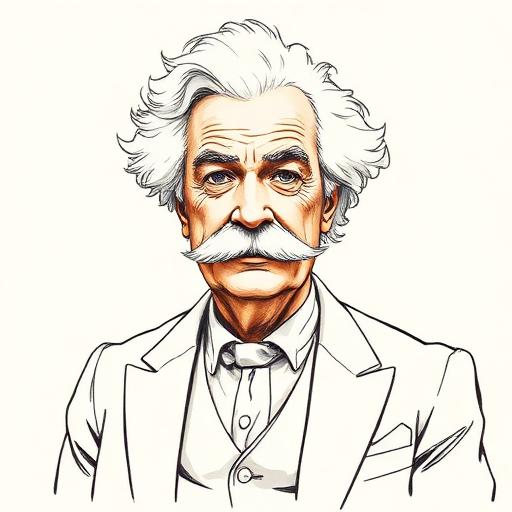
Mark Twain's repeated investment disasters — 1880s and 1890s
Twain was one of the most successful authors in American history and one of the most reliably disastrous investors. He lost significant sums in a series of failed ventures, most famously the Paige Compositor — an automated typesetting machine he became convinced would revolutionise printing. He invested the equivalent of millions of dollars over more than a decade, repeatedly told that the machine was almost ready, almost perfected, almost there. It never worked commercially. He also invested in other ventures that failed and made a series of decisions that left him bankrupt in 1894. Twain's investment pattern shows the Anxious Achiever's specific version of poor financial decision-making: not recklessness, but a combination of emotional attachment to an idea, reluctance to cut losses and admit the thesis was wrong, and an underlying anxiety that drove continued investment to avoid the psychological pain of accepting failure. He eventually recovered financially through a combination of continued writing and a business manager named Henry Rogers who took over his finances entirely — which is itself an illustration of the archetype: sometimes the highest-value financial decision is recognising what you're not good at and finding someone you trust completely to handle it.